Stack
Libraries, packages & assets I build with
Libraries
Base UI (opens in new tab)
Unstyled, accessible React components with no CSS attached, built by people from the Radix, Floating UI and Material UI teams. A solid base when a design system needs its own look from day one.
Downshift (opens in new tab)
Hooks for accessible autocomplete, combobox and select inputs in React. It handles behavior and state and leaves the markup to you. That solves the fiddliest component of any design system.

Headless UI (opens in new tab)
Unstyled, accessible components from Tailwind Labs (menus, listboxes, comboboxes, dialogs), made to be styled with Tailwind classes. One of the few headless libraries that also comes in a Vue version.
MJML (opens in new tab)
A markup language that compiles to responsive email HTML: the nested tables and inline CSS every mail client still expects, without writing them by hand. Framework-agnostic and around since 2015.
Motion (opens in new tab)
The animation library formerly known as Framer Motion, now framework-agnostic. Hardware-accelerated where the browser allows it, with a spring model that behaves the way you expect.
Phiki (opens in new tab)
TextMate-grammar syntax highlighting in PHP, so code blocks arrive already highlighted instead of waiting on a client-side pass. Highlights every snippet in the garden.
PhotoSwipe (opens in new tab)
The lightbox on the travel albums. Pinch-zoom that behaves like the OS viewer, keyboard and screen-reader support out of the box and no dependencies.
Radix Colors (opens in new tab)
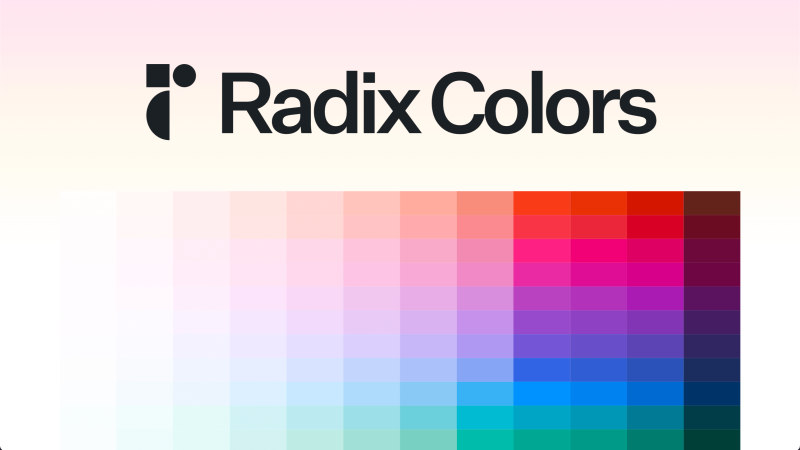
31 color scales with 12 steps each. Every step has a defined job: background, hover, border, solid fill, text. Dark mode, alpha and P3 variants are included, so the hard part of a palette is already done.
Radix Primitives (opens in new tab)
Unstyled, accessible React components (dialog, popover, tabs and more) with keyboard and focus handling already solved. You can adopt them one at a time.
React Aria (opens in new tab)
Adobe’s accessible, unstyled building blocks for React, either as low-level hooks or as 50+ ready components you style yourself. The most thorough of the headless libraries, with internationalization built in.
React Email (opens in new tab)
Write HTML emails as React components instead of nested tables, preview them locally and render them to HTML for any sending service. Made by Resend, but not tied to it.

ScrollyVideo.js (opens in new tab)
Ties video playback to the scroll position for scroll-driven storytelling. Works in plain JavaScript and comes with components for React, Vue, Svelte and Astro.

Swup (opens in new tab)
Page transitions without a framework. Swaps one container, keeps the header and footer alive and leaves the markup server-rendered. What makes navigating this site feel continuous.

Taxi.js (opens in new tab)
Small PJAX router for page transitions without a framework. The closest alternative to Swup, which is what this site uses instead.
Build tooling
Docusaurus (opens in new tab)
Meta’s static-site generator for documentation: it turns Markdown and MDX into a fast static site. Versioned docs, translations and search come built in, which covers most of what a docs site needs.
esbuild (opens in new tab)
Bundles the JavaScript here in about twenty milliseconds. Fast enough that the build stops being a step you think about.
Kirby (opens in new tab)
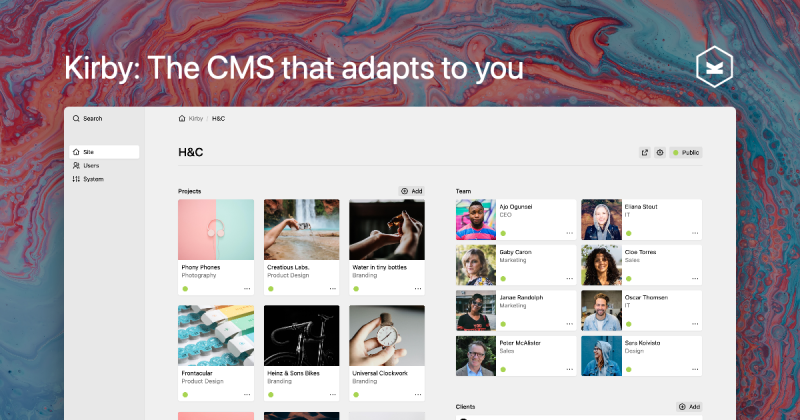
File-based CMS with no database. Every page is a folder and a text file, which means the whole site is greppable, diffable and lives in Git. This site runs on it.
Nextra (opens in new tab)
The Next.js counterpart to Docusaurus: docs and blog sites written in MDX, with themes for both or your own. Search and syntax highlighting run at build time, so there is nothing extra to host.
PostCSS (opens in new tab)
The CSS pipeline on this site: imports, preset-env for the syntax browsers have not caught up to yet, autoprefixer and cssnano at the end. Only the parts this site needs.

Unlighthouse (opens in new tab)
Runs Lighthouse across every page of a site rather than one at a time, then puts the results in a single sortable report. Finds the page you would never have thought to test.
Utilities
Easing Gradients (opens in new tab)
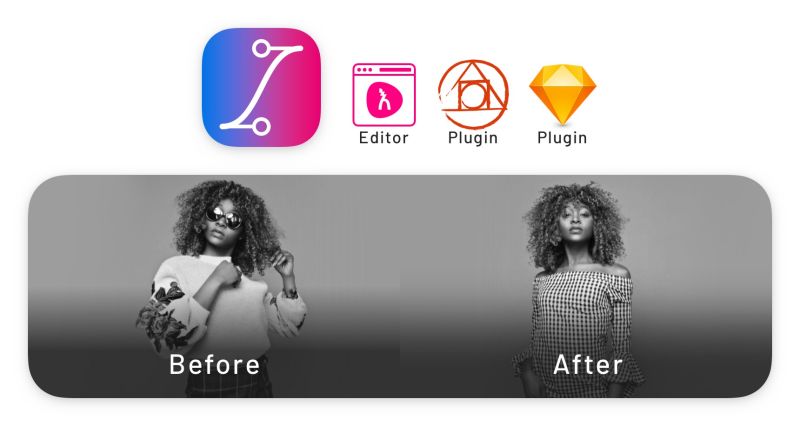
Makes CSS gradients follow an easing curve instead of a straight line, which removes the hard edge where a gradient meets solid color. An editor in the browser, plus a PostCSS plugin to use the result in a build.
Emoji to image (opens in new tab)
Pick an emoji and download it as a PNG in Apple, Google, Twitter or Facebook style. Handy for mockups and slides, where a system emoji would look different on every machine.
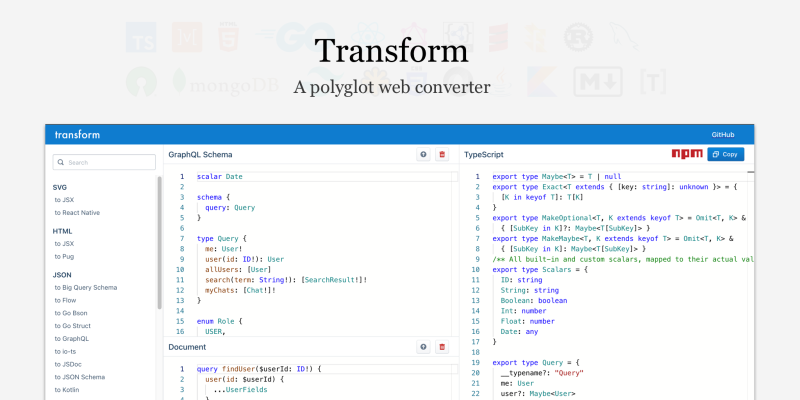
HTML to JSX (opens in new tab)
Paste HTML, get JSX back. One page of transform.tools, which has 60+ converters along the same lines: SVG to JSX, JSON to TypeScript, CSS to Tailwind and more.
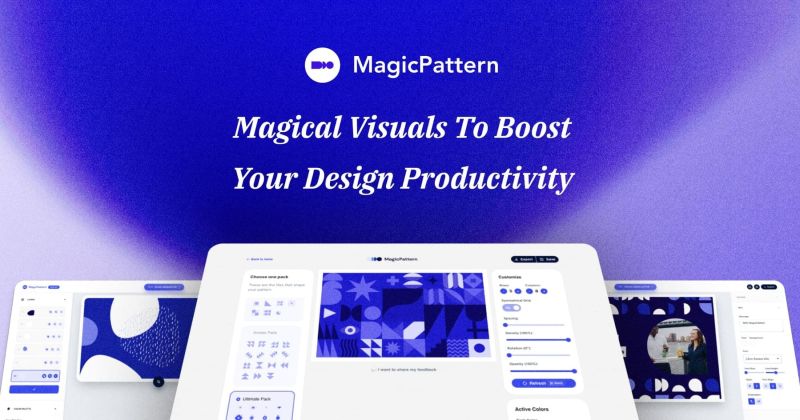
MagicPattern (opens in new tab)
A toolbox of 30+ generators for backgrounds, patterns, gradients, blobs and waves, exported as images or as CSS and SVG code. Several generators are free, the rest sit behind a subscription.
SVGOMG (opens in new tab)
SVGO in the browser, with a live preview and a slider per optimization. Paste an icon in, see exactly what each pass removes before you commit to it.
Utopia (opens in new tab)
Generates fluid type and space scales as clamp() values from two breakpoints. Replaces the pile of media queries most type scales end up as.
Icons & assets
Iconbuddy (opens in new tab)
One search across 300k+ open-source icons from more than 100 sets, with editing and plugins for Figma and VS Code. Each icon keeps the license of the set it comes from.

Iconoir (opens in new tab)
Around 1,400 hand-drawn SVG icons, stroke-only and MIT licensed, with no account and no attribution requirement. The set this site runs on.
MingCute (opens in new tab)
An open-source icon set of 1,600+ icons in regular and filled, drawn on a 24px grid with a 2px stroke. Packages for most frameworks, an icon font and a Figma plugin, under Apache-2.0.
SVG Hub (opens in new tab)
Over 70 decorative SVGs (squiggles, scribbles, arrows, shapes) to recolor and paste in. The license is CC BY-NC, so they are only meant for personal projects.
SVG Loaders (opens in new tab)
Twelve loading spinners in pure SVG, animated with SMIL instead of CSS or JavaScript. Drop one in and set the color through fill.
Repositories
sindresorhus/awesome (opens in new tab)
The list of awesome lists: a curated index of topic lists for almost every language, platform and field. Where to start when you need the well-regarded options in an area you do not know yet.